
Ever asked an AI to crack a joke and gotten tumbleweed silence instead? You’re not alone—one July 15, 2025 Medium roundup called most chatbot humor “recycled dad jokes.”
The problem isn’t the punchline; it’s the pause. Comedy happens in that split-second beat between setup and payoff, and large language models sprint right past it.
Over four weeks we tested 20+ story generators to find the best AI tools for comedy writing—platforms that let you stretch the pause, sharpen the punchline, and keep a running gag alive. Eight made us laugh for the right reasons. Ready to meet an AI co-writer with real comic timing?
How we graded each generator
Before we scored a single tool, we set ground rules you can copy.
Across four weeks of testing we wrote everything from one-paragraph gags to multi-chapter farces while asking one question: Can we control timing so the laugh lands where we want it?
We built a five-factor scorecard:
- Beat control – How easily can you pause, reorder, or tighten a scene?
- Joke freshness – Does the AI avoid recycled punchlines and deliver original humor?
- Steering ease – Can you edit, rewrite, or nudge mid-story without restarting?
- Filter friction – How often do safety rails blunt the joke?
- Price to play – What does each laugh cost after free credits?
Each factor earned a 1-to-5 rating, and beat control counted double because timing is comedy’s heartbeat. We averaged the numbers and sorted high to low; the list that follows reflects those results.
Simple, transparent, repeatable. Run the same prompts tomorrow and you should see a similar order.
1. DreamGen: Give Yourself the Director’s Chair
DreamGen gives you remote control over comic timing. In Story and Role-play modes you can pause a scene, rewrite a line, or insert a “(beat)” and the AI pivots without losing context.
This flexibility comes from a context window that spans 5,000 tokens on the free tier and up to 30,000 tokens on Pro (powered by the GLM 4.7 model), roughly a 100-page script. DreamGen’s product specs show the free tier covers about 2,000 role-play messages per month on the Lucid Base model, with another 250 daily messages after that (DreamGen pricing page), enough to workshop a sketch ten different ways before you pay a cent. The platform is independently operated with no outside funding and reports more than 1 million registered users and 5,000 Discord members.
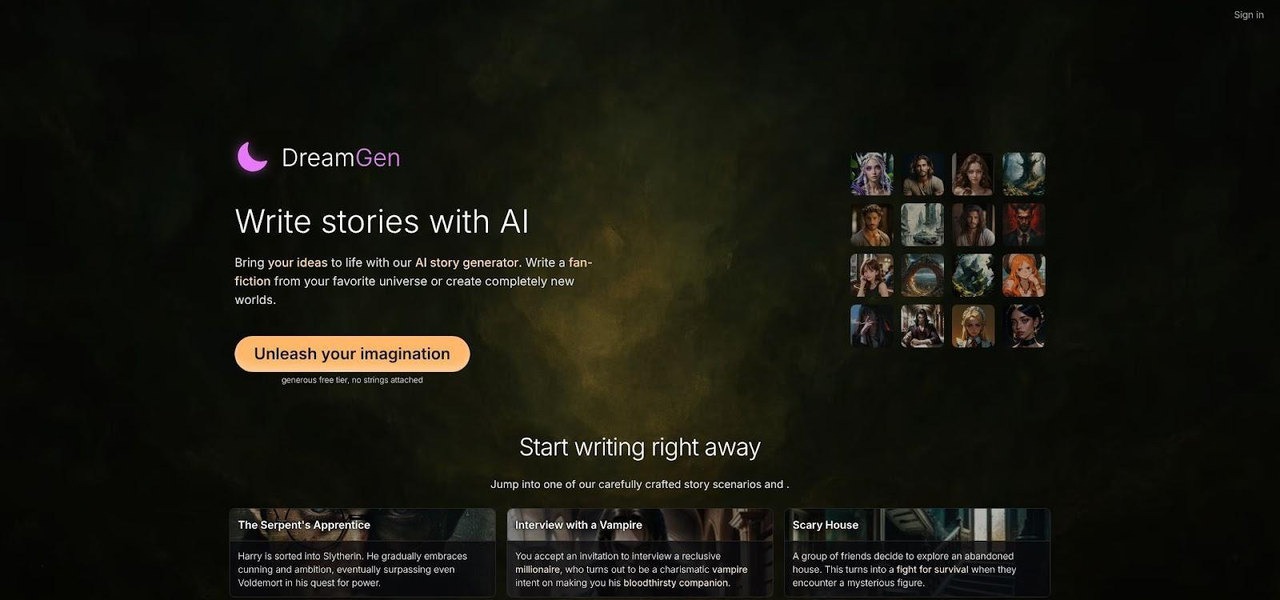
The Scenario Codex keeps running gags alive. Log each character’s quirks once, and DreamGen threads them through future chapters automatically. Dialog-heavy Role-play chats turn those quirks into rapid-fire banter, perfect for sketch comedy where laughs rely on quick exchanges.
Pain points: the dashboard feels crowded on day one, and there is no built-in text-to-speech, so live performers need a separate voice tool.
If you need granular control that lets you pause, cut, or rearrange on command, DreamGen ranks as the best AI story generator for fiction writers because it lets you direct every beat without the “sorry, I can’t do that” interruption.
2. ChatGPT: the Swiss-army Pen for Quick Comedic Drafts
OpenAI’s ChatGPT is many writers’ first stop because the free tier (now defaulting to GPT-4o mini) costs nothing and replies in seconds. Need more nuance? The Plus plan ($20 per month) unlocks GPT-4o, which offers a 128 k-token window and sharper reasoning (OpenAI Help Center; GPT-4o model card).
In our test prompt, “Write a slapstick detective scene”, GPT-4o produced a three-paragraph sketch that flowed, hit genre clichés for laughs, and held together on the first try. Iterative prompts like “make it snarkier” or “swap the punchline” generated clean rewrites, perfect when you want five variants in five minutes.
Timing still needs some manual work. ChatGPT will not insert pauses unless you add an ellipsis, a “(long beat),” or split the scene across two messages. Supply those cues and the rhythm clicks.
Humor quality climbs with model tier. GPT-4o delivers fresher jokes and remembers setups for a few pages, while the free tier often drifts into safe dad-joke territory (a pattern noted in community threads).
Safety filters stay strict, so edgy satire may need rephrasing or another tool.
For brainstorming gags, outlining a comic short, or pressure-testing punchlines at speed, ChatGPT provides volume and flexibility; you add the comedic instincts.
―――――――――――――――――――――――
3. DeepStory: screenplay structure that bakes in the pause
Some jokes need a stage, not a wall of prose. DeepStory answers by drafting in true screenplay format: character names, dialogue lines, and the essential parenthetical (beat) for comedic pauses.
In a test slug line,
INT. KITCHEN – EARLY MORNING. Two exhausted detectives make coffee.
DeepStory produced two pages of brisk back-and-forth, dropped a doughnut-on-ceiling-fan sight gag, and placed two well-timed beats. Each line arrives as its own block, so you can trim or reorder moments the way a film editor sharpens a punchline.
Scenes averaged two pages in our trials, helped by technology adapted from the company’s earlier script-analysis engine. Finished drafts export cleanly to Final Draft or PDF, letting us assemble a ten-scene sketch show in under an hour.
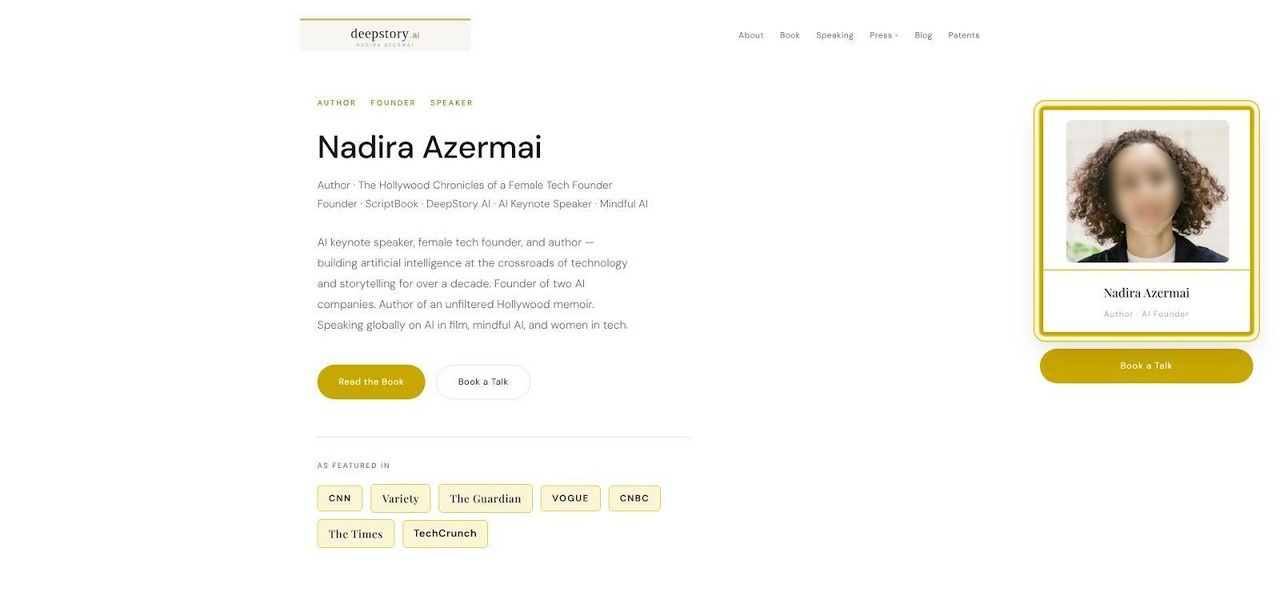
The site reports 150,000 users and 10 million text generations, proof that writers value its fast, formatted output. The free tier limits how many scenes you can create before upgrading, edgy content can trigger a policy check, and DeepStory is not built for novel-style narration.
When timing and visual gags must hit on cue, a screenplay-native generator stands out. DeepStory hands you that stage, script in hand, pauses included.
―――――――――――――――――――――――
4. Jasper: polished humor for brands that must stay on brand
Jasper handles comedy the way copy editors handle ad copy: crisp, on message, and never off-color.
Inside its AI-powered editor you will find Tone and Brand Voice controls. Upload a few writing samples, label the voice “playful but professional,” and Jasper mirrors that style in every output.
Iteration is quick. Highlight a flat sentence, choose Rewrite → Humorous, and Jasper offers three punchier options. Need a snarky listicle intro? Run the Blog Post recipe, set tone to “light snark,” and Jasper adds a zinger at each subhead.
Strict filters help corporate teams but limit darker satire because anything stronger than PG-13 triggers a block and an automatic plagiarism scan.
Cost is the main trade-off. The Creator plan starts at $39 per month (billed annually) for one seat and unlimited words, while Pro and Business tiers climb higher. Large teams can see costs rise quickly.
For marketers and agencies that need humor without risk, Jasper is a safe choice, delivering clean copy that still passes legal and brand review.
―――――――――――――――――――――――
5. Chatsonic by Writesonic: improv in your pocket, voices included
Chatsonic feels like ChatGPT wearing a costume trunk. Activate a built-in persona—stand-up comic, snarky critic, wholesome kids’ host—and the tone pivots immediately. Tap the mic icon, speak your prompt, and the bot answers aloud in real time.
That voice loop is more than a novelty. Say a line, pause for “laughter,” then add “punchier, shorter,” and Chatsonic rewrites on the spot while preserving rhythm, ideal for performers who workshop material out loud.
A Writing Style (Brand Voice) toggle keeps longer pieces consistent, similar to Jasper’s Brand Voice but without the enterprise bill. Upload a blog excerpt, and Chatsonic mirrors its quirks in future drafts. Memory is deep enough to recall setups for several pages, so a callback joke lands instead of drifting.
Filters land in the middle. Mild profanity passes, but anything beyond PG-13 earns a soft rewrite suggestion. The free trial supplies 10,000 Premium words; after that, the dedicated Chatsonic plan starts at $29 per month. Heavy rehearsal can burn credits quickly, and latency can spike when advanced output or image generation is active.
If you want a multimodal writer’s room on your phone—text, voice, images, personas—Chatsonic is a flexible all-rounder.
―――――――――――――――――――――――
6. Rytr: lightning-fast gags for shoestring budgets
Rytr is a two-click joke machine. Select the Story Plot template, set tone to “Funny,” drop in ten words, and within seconds you receive a tight paragraph that delivers setup, escalation, and, yes, usually a groan-worthy pun.
That speed turns Rytr into a handy ideation pad. Need five alternate punchlines for an email? Generate five drafts, pick the best, and move on, all in one panel so you can compare lines side by side.
The free tier covers 10,000 characters a month, and the Saver plan costs $9 per month for 100,000 characters, while the Unlimited plan is $29 per month (Rytr pricing page). Even the paid tier costs less than a single brainstorming coffee run.
You do trade depth for velocity. Rytr has no long-term memory, so running gags vanish between clicks. The “Funny” tone leans on puns and exclamation points, and you cannot insert scripted beats beyond basic punctuation.
Treat Rytr as a digital joke pad, not a co-author. It is perfect for quick sparks and icebreakers, but hand the marathon to a heavier tool when you need sustained comedic pacing.
―――――――――――――――――――――――
7. Sudowrite: the surgical editor your punchlines crave
Sudowrite is not for spraying out first drafts; it sharpens what you already wrote. Picture a friendly script doctor that trims fat, tightens timing, and offers alternate tags when a joke lands soft.
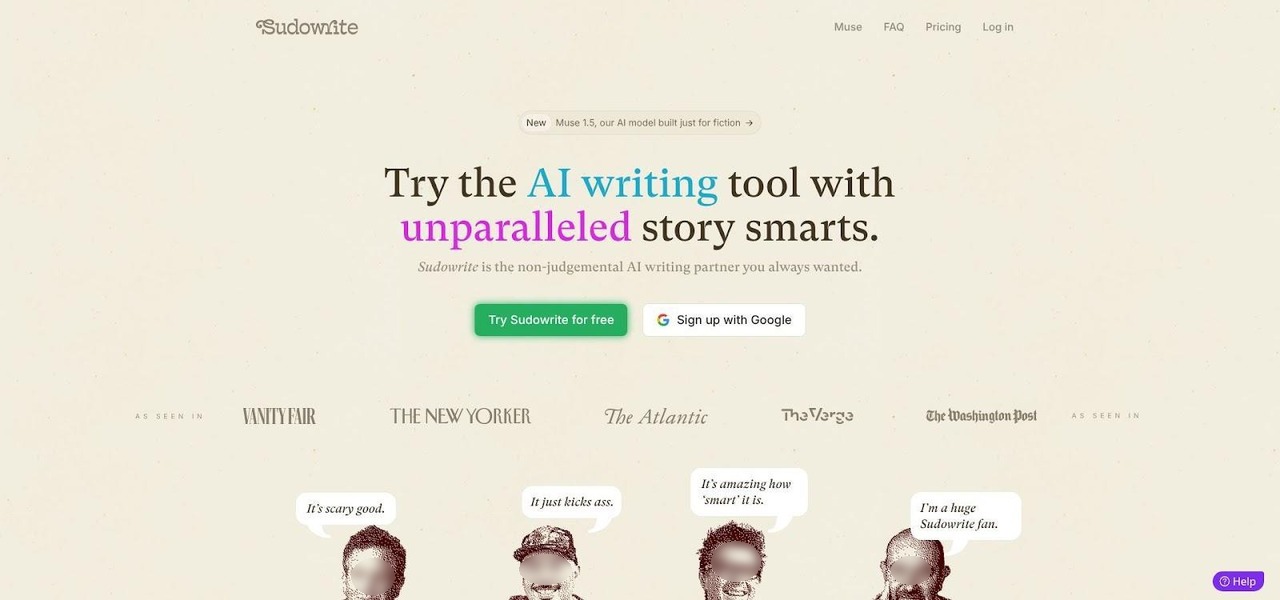
Paste a draft scene, highlight a flabby sentence, and choose Rewrite → Humorous. Sudowrite returns three leaner options, often shorter and sometimes with a surprise twist. Keep favorite phrases by merging suggestions with one click.
Its Story Engine lets you map beats (“awkward silence,” “surprise payoff”) in a sidebar, so you can eyeball pacing and drop pauses where the audience needs to breathe. Advanced AI powers a distraction-free editor built for novelists. Feed the Story Bible a quirk such as “Chef Mariano panics when anyone says ‘mayo,’” and Sudowrite keeps the gag alive across chapters.
Pricing starts at $19 per month for 225,000 credits (monthly Hobby plan) after a short free trial; the Professional tier jumps to $29 per month (or $22 billed annually) for 1,000,000 credits. Higher than Rytr, but you pay for precision. Filters follow standard AI safety policies, so very edgy satire may need rephrasing.
Use Sudowrite when a draft is “funny enough” but must become tight, punchy, and publication-ready. It turns good timing into great timing one sentence at a time.
―――――――――――――――――――――――
8. AI Dungeon: chaos comedy for live-action storytellers
AI Dungeon is part improv stage, part text adventure. Type something wild, such as “You’re a dragon lawyer defending a squirrel in nut court,” and the engine replies as a relentless narrator. Each turn becomes a comic beat, and every response is a punchline you did not expect.
Because play is turn-based, you control tempo by pausing. Read the AI’s line, count a three-second beat like a stand-up comic, then answer. Streamers enjoy that rhythm because there is no need to script ellipses for timing.
Spontaneity fuels the fun. The model runs with nearly any left-field prompt, so slapstick, meta jokes, and fourth-wall breaks flow without prompt gymnastics. Add a short memory note, such as “Running gag: judge bangs a coconut instead of a gavel,” and the system revives it whenever that character returns.
Expect volatility. Plots can derail quickly, and after a 2022 policy update the game flags explicit content, so darker humor may trigger rewrites. Most PG-13 absurdity still passes.
Choose AI Dungeon when laughter comes from surprise rather than structure. It is perfect for Friday game night or a Twitch stream where you want the AI chasing the joke while you steer the chaos.
Tips to make any AI land the laugh
Great tools help, but your prompt and edits finish the job. Five habits account for most of the gap between a polite chuckle and a real laugh.
1. Write the pause into the text.
AI generates words, not silence. If you need tension before the punchline, insert “(beat)” or an ellipsis. Psycholinguistics studies call that break the gap between expectation and payoff, a key driver of humor.
2. Seed the style before you ask for jokes.
Paste a short sample—two sarcastic lines from your script or a quippy tweet—then add “match this voice.” Few-shot examples give the model a north star to follow.
3. Iterate; don’t accept the first draft.
A 2026 Medium column on AI writing notes that most quality gains appear in rounds two and three, not round one. Regenerate, ask for a “fresher punchline,” or swap one verb; the laugh often clicks after a couple passes.
4. Lock in running gags with memory tools.
In DreamGen’s Scenario Codex you can mark a gag as canonical; in ChatGPT you simply restate it every few turns. Reminders keep the setup alive so the callback pays off later.
5. Trim ruthlessly.
Comedy loves brevity. After generation, prune extra adjectives and cut any line that delays the reveal. One aloud read-through usually exposes the fat.
FAQ: straight answers to the questions readers ask most
Can AI be funny, or are we forcing it?
Yes, if you give the model the right ingredients. Large language models remix patterns they have seen, so they can deliver wordplay and misdirection. What they lack is instinctive timing, which is why you add “(beat)” cues or edit the setup.
Which free tool should I try first?
ChatGPT’s free tier (using GPT-4o mini) is ideal for rapid idea generation, while DreamGen’s free plan (about 2,000 role-play messages per month on Lucid Base) handles longer stories and callback gags thanks to its 5,000-token memory window.
How do I stop the AI from recycling dad jokes?
Seed it with a short sample of humor you like, then add a constraint such as “avoid clichés and puns about chickens crossing roads.” If stale jokes slip through, regenerate or tweak a verb; small prompt changes usually break the pattern.
Is edgy or dark comedy allowed?
Policies vary. DreamGen permits mature themes in private scenarios (its public library is SFW only), and NovelAI permits mature themes in private drafts. ChatGPT, Jasper, and Chatsonic enforce stricter PG-13 filters. Always review each platform’s content policy before drafting boundary-pushing material.
Do I have to credit the bot on stage or in print?
Most services, including OpenAI and Sudowrite, assign full commercial rights to the user, but check the specific terms. Audiences care more about originality than authorship, so make sure your routine is not a close echo of existing work.
Conclusion
Comedy lives in the pause, so the best AI story generator is the one that lets you steer the timing. DreamGen took the top spot for its granular beat control and running-gag memory, our pick for writers who want to direct every laugh. ChatGPT and Rytr are budget-friendly idea pads, DeepStory and Sudowrite sharpen structure and punchlines, and Jasper, Chatsonic, and AI Dungeon cover brand-safe, voice-driven, and improv comedy. Match the tool to your scene, write the beat into the text, and keep this cheat sheet handy to dodge the most common pitfalls of AI-assisted comedy writing.